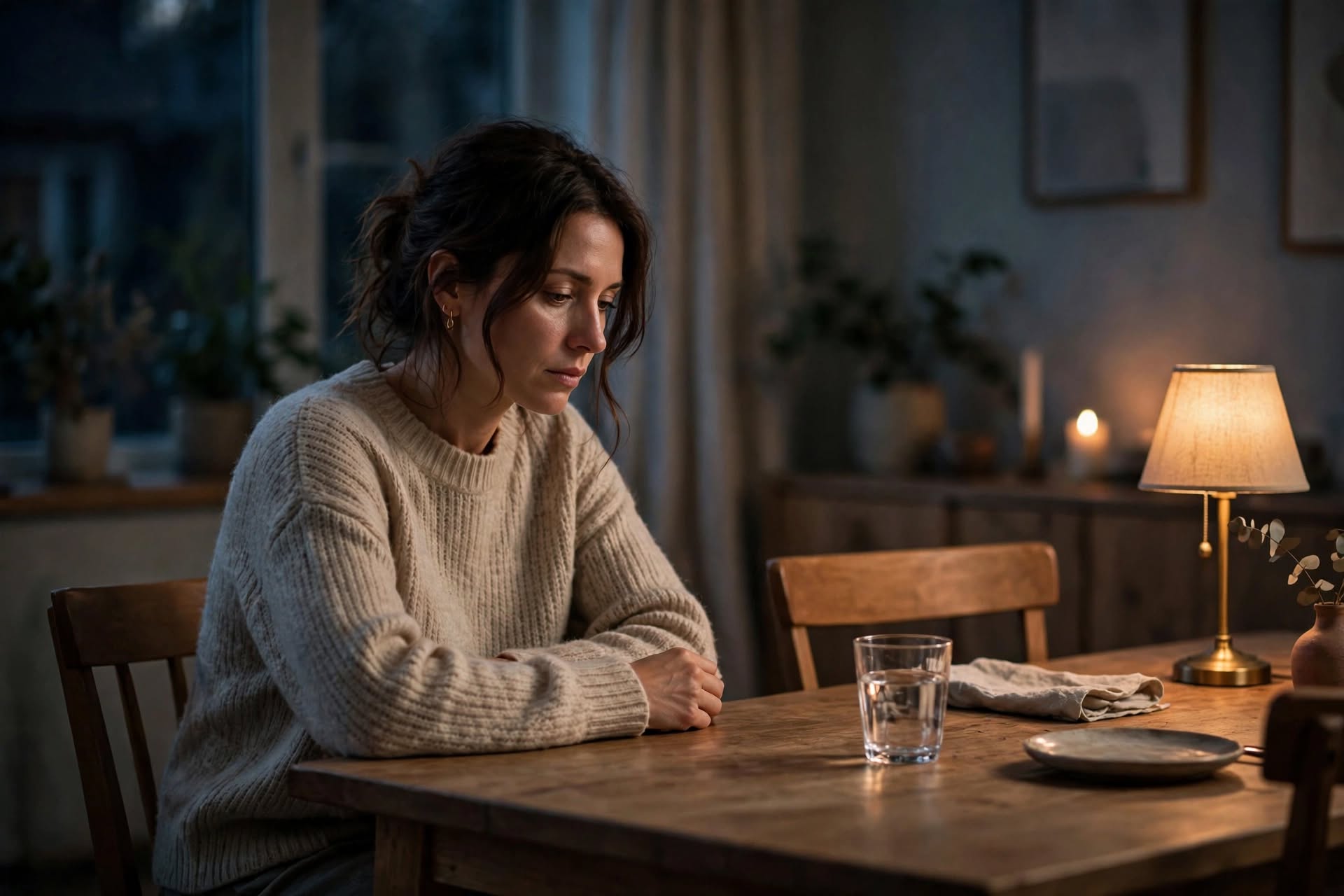
Divorce changes more than your relationship status.
It changes your daily rhythm. Your identity. Your sense of “home” in another person.
And then, once things settle… a different feeling often shows up.
Not relief. Not clarity.
But loneliness.
Even if you chose the divorce. Even if it was necessary. Even if life is “better” on paper.
You may still find yourself asking:
“Why do I feel so lonely now?”
This feeling is not a contradiction.
It is a normal response to emotional and identity separation.
Why do I feel lonely after divorce?
Loneliness after divorce happens because your emotional attachment system, daily routines, and identity were built around a partner. When that connection ends, your brain and body experience a form of withdrawal and identity disruption—not just emotional loss.
Why Loneliness After Divorce Is So Common
Loneliness after divorce is not about being alone.
It is about losing a bonded emotional system that shaped your everyday life.
Even if the relationship was difficult, your nervous system adapted to:
- Presence of another person
- Daily interaction patterns
- Shared decisions
- Emotional anchoring
- Familiar routines
When that system is removed, your mind does not immediately adjust.
What Is Actually Happening Emotionally
- Attachment Withdrawal
Your brain formed emotional dependency patterns over time.
When the relationship ends, your attachment system reacts like a loss.
- Identity Recalibration
You were part of a “we.”
Now you are rebuilding “me.”
That shift takes time.
- Routine Disruption
Loneliness often increases in:
- Evenings
- Weekends
- Transitions (home, meals, sleep)
Because those moments were previously shared.
- Emotional Silence
It is not just absence of a person.
It is absence of emotional exchange.
Signs Your Loneliness Is Part of Healing
You Miss the Routine, Not Just the Person
This is a key distinction.
You Feel Emotionally “Unanchored”
Life feels less structured emotionally.
Certain Times of Day Feel Heavier
Especially evenings and quiet moments.
You Feel Waves, Not Constant Pain
This indicates processing, not stagnation.
Common Misinterpretations
“Something is wrong with me”
This is not a malfunction.
It is adjustment.
“I should be over this by now”
Healing is not linear or time-fixed.
“This means I made a mistake”
Loneliness does not automatically mean regret.
It means attachment is recalibrating.
If you are feeling unexpectedly lonely after divorce, this does not mean you are going backward.
It often means your emotional system is adjusting to a new reality.
Gina works with individuals rebuilding identity, emotional stability, and self-connection after major life transitions like divorce.
How To Begin Coping With Post-Divorce Loneliness
- Normalize the Emotional Withdrawal
Do not fight the feeling.
Name it as adjustment, not failure.
- Rebuild Daily Structure
Loneliness increases in unstructured time.
Add simple anchors:
- Morning routine
- Planned activities
- Evening grounding habits
- Reconnect With Your Own Presence
Practice being alone without emotional avoidance:
- Walks
- Journaling
- Quiet time without distraction
- Reduce Emotional Isolation Gradually
Start small:
- One social interaction
- One message
- One shared activity
Not forced social rebuilding.
- Focus on Internal Stability First
Connection with others becomes easier when internal grounding returns.
Gina’s Personal Insight
In coaching, post-divorce loneliness is often misunderstood.
People assume it is about missing a person.
But more often, it is about missing:
- Familiarity
- Emotional rhythm
- Shared identity structure
When clients begin rebuilding their own internal stability, something important shifts.
Loneliness does not disappear immediately—but it becomes less overwhelming.
Because the person is no longer depending on external presence to feel internally anchored.
Frequently Asked Questions
Is it normal to feel lonely even if I chose the divorce?
Yes. Choice does not eliminate emotional attachment or habit-based bonding.
How long does post-divorce loneliness last?
It varies based on emotional depth, support systems, and identity rebuilding.
Will this feeling ever go away?
For most people, it significantly reduces as new routines and identity structures form.
Does loneliness mean I made the wrong decision?
Not necessarily. It usually reflects emotional adjustment, not regret.
If loneliness after divorce feels heavier than expected, it does not mean you are stuck or broken.
It means your life is reorganizing itself around a new reality.
Gina’s coaching helps you move through this transition with emotional clarity, grounded self-connection, and a steady path back to feeling whole again.