
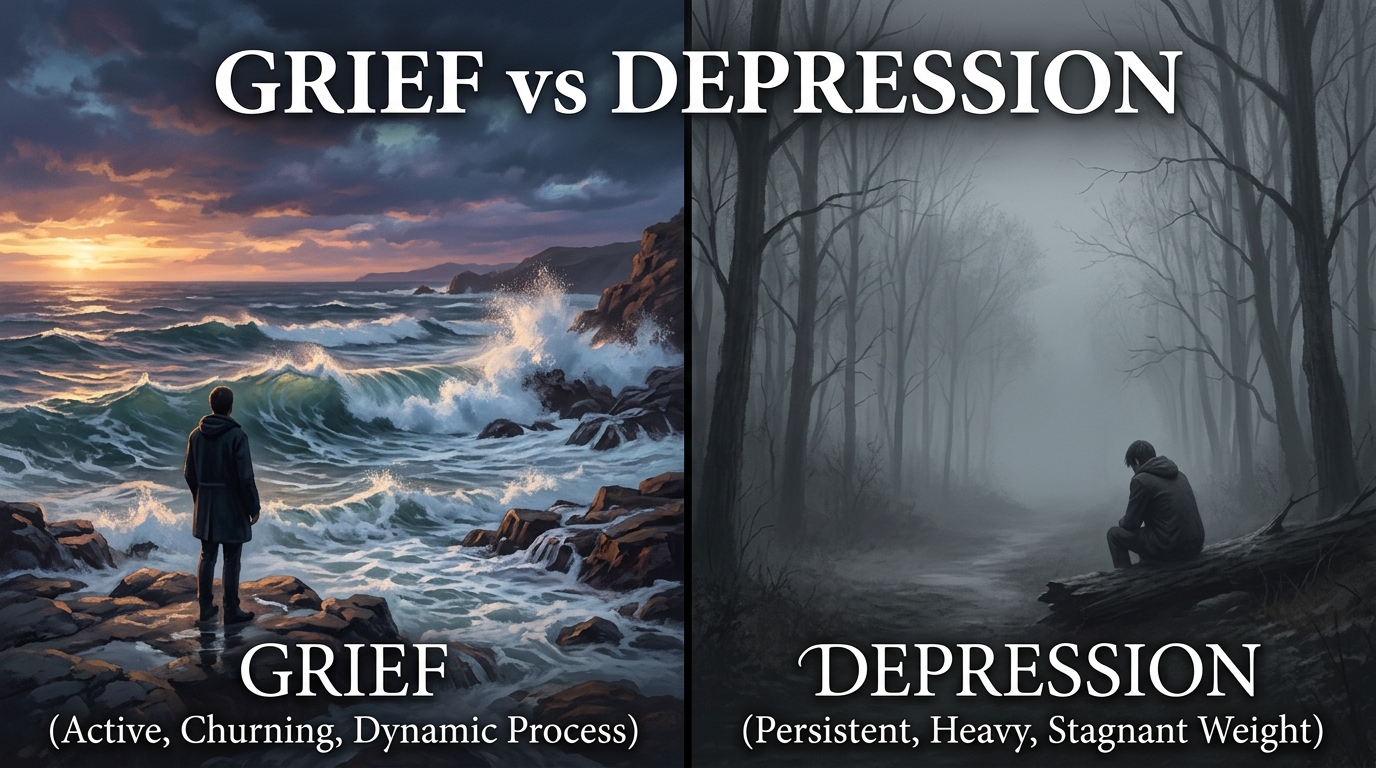
When you are deep in grief, the sadness can feel so heavy that you start to wonder if something more is going on. Grief and depression share many features, low mood, tears, exhaustion, and trouble finding joy, so it can be hard to tell them apart from the inside. Sorting out grief vs depression matters, because the two call for different kinds of support. Grief is a natural response to loss, while depression is a health condition that deserves treatment, and knowing the differences helps you find the right care.
If you are trying to make sense of what you are feeling, please be gentle with yourself. Looking closely at your own experience does not mean something is wrong with you. It means you are paying attention to your own heart, which is wise. This post walks through the general differences between grief and depression, though only a doctor or therapist can tell you for certain what is happening for you. Let me walk with you through the differences, so you can care for yourself with more clarity.
Why Grief & Depression Get Confused
Grief and depression get confused because they look alike on the surface. Both can bring deep sadness, crying, poor sleep, appetite changes, low energy, and withdrawal from people and activities. Both can make it hard to focus, work, and get through the day. If you compared a list of symptoms side by side, many items would match, which is why so many grieving people wonder which one they are experiencing.
The overlap is real, but the two are not the same thing. Grief is the natural process of responding to a loss, and as painful as it is, it is a healthy part of being human. Depression is a mental health condition that can arise with or without a loss and that tends to need treatment to lift. The differences show up less in the individual symptoms and more in the patterns, which is where it helps to look closely.
What Grief Usually Looks Like
Grief usually moves in waves. The pain comes in surges, often set off by memories and reminders, and between the waves there are stretches where you can function, connect, and even feel moments of comfort or laughter. The sadness of grief stays connected to the loss, meaning your pain centers on missing the person and the life you shared. Your sense of your own worth generally stays intact, even while your heart is broken.
Grief also tends to soften over time. The waves gradually become less frequent and less intense, and moments of normal life slowly return. Grieving people can usually still receive comfort from others, feel connected to loved ones, and hold some hope about the future, even through deep pain. Grief is heavy and long, but it moves. That movement, however slow, is one of its defining features.
What Depression Usually Looks Like
Depression tends to look flatter and more constant. Instead of waves with breaks between them, depression usually brings a low mood that persists most of the day, nearly every day, for weeks at a time. The loss of interest spreads across the whole of life, not just the parts connected to a loss. Things that once brought pleasure bring little or nothing, and comfort from others often cannot get through.
Depression also tends to attack your sense of worth. It often brings feelings of worthlessness, heavy guilt that is out of proportion, and hopelessness about the future. These thoughts go beyond missing someone and turn against the self. Depression can arrive after a loss, but it can also appear without one. Only a professional can diagnose depression, but knowing this general picture helps you notice when what you feel may be more than grief.
If you are trying to make sense of what you are feeling and want caring support, this is the kind of work Gina does with people. Schedule your coaching call and get some gentle support through this.
The Differences That Matter Most
A few differences matter most when telling grief and depression apart. Grief comes in waves, while depression tends to be constant. Grief stays tied to the loss, while depression spreads over everything. In grief, you can usually still feel moments of connection, comfort, and even joy, while depression flattens those moments. And in grief, your self-worth mostly survives, while depression tends to fill your mind with worthlessness and harsh self-judgment.
Hope is another telling difference. Grieving people, even in deep pain, can usually imagine feeling better someday, while depression often makes the future look empty or pointless. None of these differences is a test you can score yourself on, and real life is rarely tidy. But if your low mood is constant, spreads across everything, attacks your worth, and steals your hope, those are signs worth taking seriously and discussing with a professional.
When Grief & Depression Overlap
It is important to know that grief and depression can overlap. A major loss can trigger depression, especially if you have experienced it before or if the loss comes on top of other stress. Some people move through grief and develop depression along the way, carrying both at once. There is also a form of grief that stays stuck at full intensity for a very long time, which deserves professional support of its own.
If you are experiencing both, nothing about that is shameful. Loss is one of life’s heaviest weights, and it makes sense for it to press on your mental health. The overlap simply means you deserve more support, not less. A professional can help untangle what is grief and what is depression, and can treat the depression while you continue to grieve. You do not have to sort out the overlap alone, and you should not have to.
When to Reach Out for Professional Help
There are times when reaching out for professional help is the right step. If your low mood has been constant for weeks, if you cannot function in daily life, if you feel worthless or hopeless, or if nothing brings you any comfort at all, please talk to a doctor or therapist. These signs suggest that depression may be present alongside your grief, and depression is treatable. Getting an evaluation is a caring, responsible step, not an overreaction.
And if you ever have thoughts of not wanting to be here, please reach out right away to a doctor, therapist, or crisis line. Those thoughts are a signal that you need and deserve immediate support, and help is available. Reaching out in these moments is an act of courage and self-care. You matter, your life matters, and there are people ready to help you through this. Please do not carry those thoughts alone.
How Support Helps in Both
Support helps in both grief and depression, though the kind of support differs. Depression generally calls for professional treatment, which may include therapy and sometimes medication, guided by a doctor or therapist. Grief calls for care, connection, and space to mourn, which can come from loved ones, support groups, counselors, and grief coaches. Many people benefit from several forms of support at once, layered around their needs.
Coaching can be a meaningful part of support for grief, offering steady guidance as you cope, rebuild, and find your way forward. Coaching is not therapy and does not treat depression, but it can walk alongside you through the losses and changes of grief, and alongside any professional care you receive. The point is that support exists for whatever you are carrying. Facing grief, depression, or both, you deserve care that fits what you are going through.
Being Honest With Yourself About What You Feel
One of the kindest things you can do is be honest with yourself about what you are feeling. It can be tempting to minimize your struggle, telling yourself it is just grief and pushing through, even when something feels heavier than grief alone. Checking in with yourself honestly, noticing how constant the sadness is, how you are treating yourself in your thoughts, and how much hope you can feel, gives you real information about what you need.
Honesty might lead you to reach out to a professional, lean harder on your support system, or simply keep grieving with more self-compassion. Any of those outcomes is a win, because each one comes from taking your inner life seriously. You are the one living inside your feelings, and your honest read on them matters. Pay attention to yourself with care, and let what you notice guide you toward the right support.
Clarity Helps You Heal
Here is what I most want you to hold onto. Clarity about what you are feeling helps you heal. Grief and depression are different, and the differences matter, because they point you toward the care you need. Grief asks for time, love, and support while your heart mends. Depression asks for treatment, and it responds to treatment. Knowing which you are facing, or realizing you may be facing both, is the first step toward getting the right help.
Be gentle with yourself as you sort through what you feel. Pay attention to the patterns, be honest about the weight you are carrying, and reach out to a professional when the signs point beyond grief. There is no shame in either experience, and there is real help for both. Whatever you are carrying, you do not have to carry it in confusion or alone. Clarity, care, and support can lead you back toward light.
If you want caring support as you move through grief, you do not have to do it alone. Speak with Gina today and take a gentle step forward.