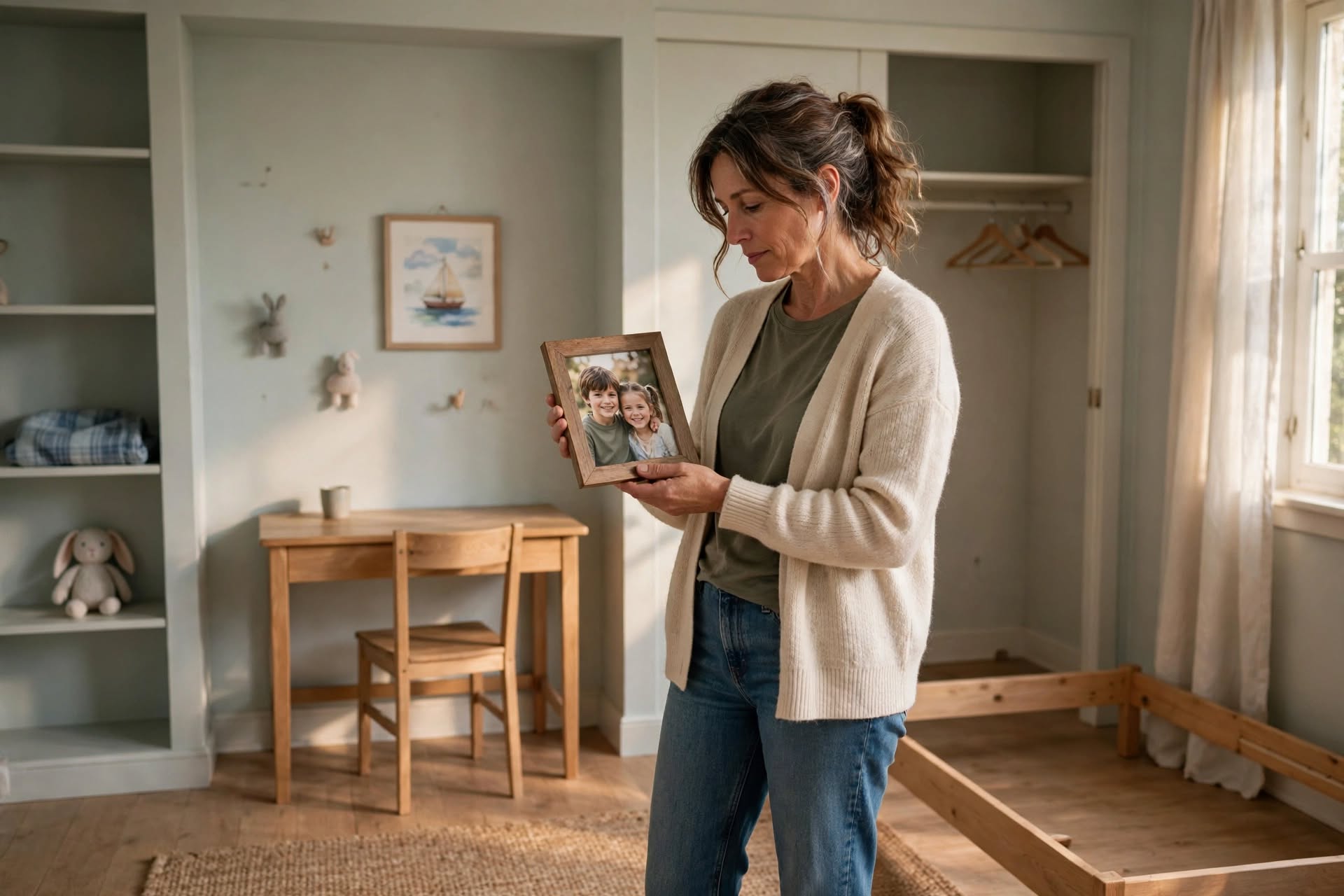
For years, your life had a rhythm.
Wake up.
Take care of the kids.
Manage schedules.
Solve problems.
Be present.
Be needed.
Be everything.
Then one day, the house gets quieter.
The routines change.
The rooms stay clean longer.
The energy shifts.
And your children—who once filled your days and shaped your identity—are now living their own lives.
At first, you tell yourself: “This is good. This is what I raised them for.”
And it is.
But then a different feeling begins to surface.
A quiet, unsettling question: “If I’m not needed in the same way anymore… who am I now?”
If you’ve found yourself here, you are not alone.
You are in one of life’s most underestimated identity transitions.
An identity crisis after becoming an empty nester happens when your primary role as a daily caregiver begins to shift or end. For many parents, especially mothers, identity becomes deeply connected to raising children. When children leave home, it can create a sense of loss, confusion, or lack of purpose. This transition is normal, and identity can be rebuilt through self-reflection, new routines, and reconnecting with personal interests and goals.
Why Empty Nest Syndrome Affects Identity
For many years, identity is built around caregiving.
You are:
- the organizer
- the nurturer
- the supporter
- the problem solver
- the constant presence
Your daily life revolves around others’ needs.
So when your children leave home, it’s not just silence in the house.
It’s a shift in identity structure.
Because the role that shaped your daily life is no longer the same.
This creates a natural question: “If I’m not doing all of that anymore… who am I now?”
Signs You May Be Experiencing Identity Loss
You might recognize yourself if:
- You feel emotionally empty or restless
- You feel unsure of your purpose
- You miss being needed daily
- You feel disconnected from your old routines
- You struggle to enjoy free time
- You feel invisible or overlooked
- You find yourself thinking about the past often
- You feel unmotivated or directionless
- You feel a loss of structure
- You feel unsure what comes next
These feelings are not unusual.
They are part of transition.
Emotional Stages of Becoming an Empty Nester
- Relief and Pride
At first, there is often pride.
You raised independent children.
You accomplished something meaningful.
- Quiet Disruption
Then routines shift.
Life feels unfamiliar.
- Emotional Awareness
You begin noticing:
- loneliness
- restlessness
- identity confusion
- Reflection
You start asking:
- What do I want now?
- What is my life about beyond motherhood?
- Rebuilding
Slowly, a new sense of identity begins to form.
Not replacing motherhood—but expanding beyond it.
Becoming an empty nester doesn’t mean your purpose is gone—it means your role is changing. Gina Disney’s 3 R’s Framework helps you process this transition, reconnect with your identity beyond caregiving, and rebuild a meaningful next chapter that includes you again.
Why This Transition Feels Harder Than Expected
- You Didn’t Just Lose a Routine
You lost a daily identity anchor.
- Your Sense of Being Needed Changes
For years, being needed shaped your value.
Now that shifts.
- Silence Feels Different Than Expected
Quiet doesn’t always feel peaceful at first.
It can feel unfamiliar.
- You Put Yourself on Hold for Years
Many parents delay personal goals for decades.
Now those postponed parts of life resurface.
How to Rediscover Yourself in This Season
- Allow the Transition to Be Real
Don’t rush to “move on.”
Acknowledge the shift.
- Reintroduce Structure Into Your Day
Small routines help rebuild stability.
- Reconnect With Things You Once Enjoyed
Ask:
- What did I enjoy before motherhood became all-consuming?
- Explore New Interests
You are not limited to your past identity.
- Create a New Personal Vision
Ask:
- What do I want this next chapter to feel like?
- Strengthen Your Identity Outside Motherhood
You are still:
- a person
- a woman
- someone with interests, dreams, and purpose
Gina’s Personal Insight
One of the most tender conversations I have with women is around this stage of life.
They often say:
“I thought I would feel free… but I just feel lost.”
What I’ve learned is that empty nesting is not an ending of purpose—it is a redistribution of identity.
For years, identity is outward-facing.
Then suddenly, life invites you inward again.
Not to erase motherhood—but to expand beyond it.
And when women begin to reconnect with themselves in this season, something powerful happens:
They don’t lose their identity as mothers.
They rediscover themselves as whole people again.
Frequently Asked Questions
Is identity crisis after empty nest normal?
Yes. It is very common as caregiving roles shift and daily routines change.
Why do I feel sad even though I’m proud of my children?
Because pride and grief can exist at the same time.
How long does empty nest identity crisis last?
It varies. Many people begin to feel more grounded as they rebuild routines and reconnect with themselves.
Can I feel fulfilled again after my kids leave home?
Yes. Many people discover new passions, purpose, and direction in this stage of life.
What helps most during empty nest transition?
Self-reflection, new routines, social connection, and rediscovering personal identity.
You Are Still You—Even in This New Season
Becoming an empty nester is not the end of your role in life.
It is the beginning of a new relationship with yourself.
At When She Speaks… Listen, Gina Disney supports women navigating identity transitions, grief, divorce, and midlife reinvention. Through her 3 R’s Framework, she helps you reconnect with yourself, rebuild meaning, and step into your next chapter with clarity and confidence.
You are not becoming less important.
You are becoming more aware of who you are beyond what you do for others.