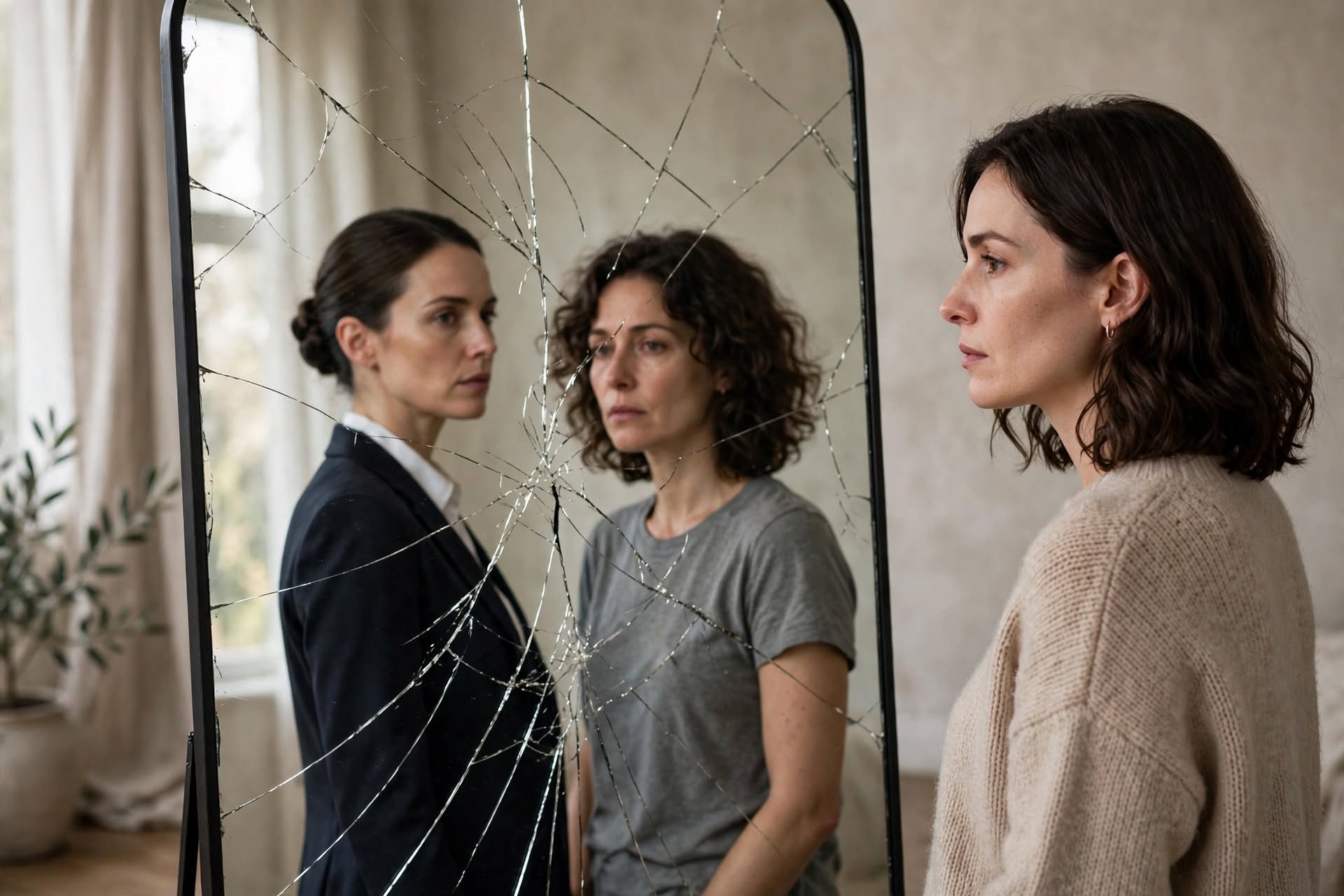
There is a moment many people experience after a major life change.
It might come quietly.
You wake up one morning and realize:
“I don’t feel like myself anymore.”
It can feel unsettling because nothing is “wrong” in an obvious way — yet something inside feels different.
This often happens after divorce, loss, retirement, children leaving home, or a major shift in relationships or career.
You may still recognize your life.
But you may no longer recognize yourself inside it.
That disconnect is not random.
It is what happens when identity is built around circumstances that have now changed.
Why do major life changes affect identity?
Major life changes affect identity because your sense of self is shaped by your roles, routines, relationships, and environment. When these change, your internal identity needs time to adjust and rebuild.
What Is Identity Really Made Of?
Your identity is not a fixed thing.
It is a combination of:
- Your roles (partner, parent, professional)
- Your relationships
- Your routines
- Your beliefs
- Your values
- Your experiences
For most people, identity is not something they consciously build.
It is something that forms over time based on how life unfolds.
So when life changes, identity often shifts with it.
Why Major Life Changes Disrupt Identity
Your Roles Change
Many people define themselves through roles.
For example:
- “I am a wife”
- “I am a mother”
- “I am a caregiver”
- “I am a professional”
When a role ends or changes, your internal identity can feel unstable.
Your Routine Disappears
Routine creates a sense of stability.
When your daily structure changes, your sense of self can feel unclear.
Even small changes in routine can create emotional disorientation.
Your Future Vision Shifts
You may have imagined a future based on your previous life path.
When that path changes, your sense of direction can feel uncertain.
Emotional Adjustment Takes Time
Even when a change is “positive” or necessary, your emotional system still needs time to adapt.
Identity does not update instantly.
It adjusts gradually.
Common Identity Shifts After Life Changes
After Divorce
You may question:
- Who am I without this relationship?
- What do I want now?
- What parts of me were shaped by this marriage?
After Loss
You may feel like:
- A part of your identity is gone
- The world feels unfamiliar
- You are no longer the same person emotionally
After Children Leave Home
Many parents experience:
- Loss of daily purpose
- Shift in identity from caregiver to individual
- Unexpected emotional emptiness
After Career Change or Retirement
You may feel:
- A loss of structure
- A loss of identity tied to work
- Uncertainty about your next chapter
Signs Your Identity Is Changing
You Feel Disconnected From Your Old Self
You may think:
“I used to be more confident, motivated, or clear.”
You Question Your Choices More Often
Even simple decisions feel uncertain.
You Feel Emotionally “In Between”
You are no longer who you were.
But you are not yet who you are becoming.
You Feel Restless or Unsettled
Something inside you feels like it needs attention, but you are not sure what it is.
If your sense of identity feels unclear right now, it does not mean you are losing yourself.
It may mean you are in the middle of rebuilding yourself.
Gina helps people navigate identity shifts, rebuild emotional stability, and create clarity during life transitions.
How To Stabilize Your Identity Again
- Stop Trying To “Go Back” to Who You Were
You are not meant to return to an old version of yourself.
That version was shaped by a different season of life.
- Identify What Has Not Changed
Even during change, some parts of you remain steady:
- Your values
- Your strengths
- Your core personality
- Your lived experiences
These become your anchor.
- Focus On Small Daily Decisions
Identity is rebuilt through action.
Ask:
“What feels right for me today?”
Not:
“Who should I be forever?”
- Explore Without Pressure
Try new experiences without needing them to define your entire future.
You are gathering information about yourself.
- Allow Your Identity To Evolve
You are not supposed to have one fixed identity for your entire life.
Change is part of growth.
Gina’s Personal Insight
In coaching work, one of the most common patterns is this:
People believe they have “lost themselves.”
But in reality, they are experiencing identity lag.
Their life has changed faster than their sense of self can update.
So they feel out of sync.
Not broken.
Not lost.
Just in transition.
Once they begin to understand this, the pressure often softens.
And clarity begins to return naturally over time.
Frequently Asked Questions
Is it normal to feel like a different person after life changes?
Yes. Major transitions often reshape your identity and self-perception.
How long does identity confusion last?
It varies. It depends on the depth of the change and how much time you allow for adjustment.
Can I rebuild my identity after loss or divorce?
Yes. Many people rebuild stronger, more aligned identities after major life transitions.
Why do I feel disconnected from my old self?
Your old identity was tied to circumstances that have now changed.
Your mind needs time to adjust to the new reality.
If you feel different after a major life change, it does not mean you are losing who you are.
It may mean you are in the process of becoming someone new — someone more aligned, more aware, and more connected to your present life.
Gina’s coaching can help you navigate this transition, rebuild clarity, and step into your next chapter with confidence.