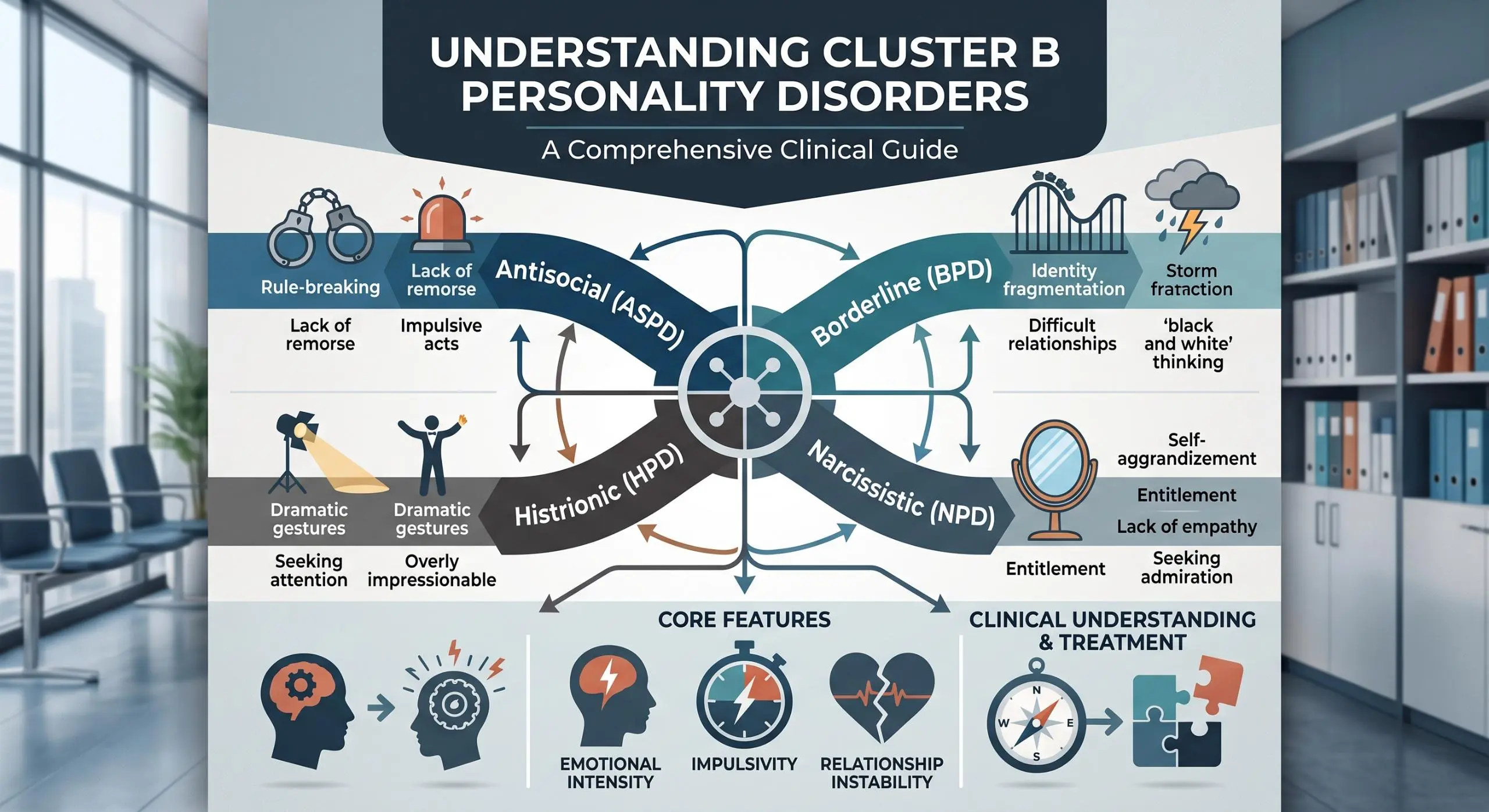
Cluster B personality disorders—comprising antisocial personality disorder (ASPD), borderline personality disorder (BPD), histrionic personality disorder (HPD), and narcissistic personality disorder (NPD)—represent some of the most complex and frequently misunderstood conditions in psychiatric practice. These disorders share core features of emotional intensity, impulsivity, and relationship instability, yet each manifests in distinct patterns that require nuanced clinical understanding and targeted treatment approaches.
Defining the Cluster B Construct
From a diagnostic perspective, personality refers to the enduring patterns of perceiving, relating to, and thinking about oneself and the environment. When these patterns become inflexible, maladaptive, and cause significant functional impairment or subjective distress, they may constitute a personality disorder.
The Diagnostic and Statistical Manual of Mental Disorders, Fifth Edition (DSM-5-TR), organizes personality disorders into three clusters based on descriptive similarities:
Cluster A (odd/eccentric): Paranoid, schizoid, and schizotypal personality disorders
Cluster B (dramatic/emotional/erratic): Antisocial, borderline, histrionic, and narcissistic personality disorders
Cluster C (anxious/fearful): Avoidant, dependent, and obsessive-compulsive personality disorders
Individuals with Cluster B disorders typically exhibit heightened emotional states, difficulty maintaining healthy relationships, identity disturbances, and varying degrees of impulsivity.
Shared Characteristics of Cluster B Disorders
While each disorder in this cluster has unique features, they share several common dimensions:
1. Emotional Dysregulation
Emotional intensity is a hallmark across all four conditions. Individuals often experience emotions more powerfully than others and struggle with regulating their emotional responses. This manifests differently across disorders—from BPD’s rapid mood shifts to NPD’s fragile reactivity to criticism.
2. Relationship Instability
People with Cluster B disorders commonly approach relationships in ways that create conflict and upheaval. Relationship patterns vary significantly: individuals with BPD may have intensely unstable relationships, while those with ASPD may form more detached and exploitative connections.
3. Impulsivity
Impulsive behaviors that create major life disruptions are common across the cluster, though they manifest differently. This may include reckless spending, substance use, risky sexual behavior, or impulsive aggression.
4. Identity Disturbance
An impaired sense of self and self-direction is a core feature. Individuals with NPD often maintain an inflated but tenuous self-image, while those with HPD may have an externalized sense of self that shifts based on others’ perceptions.
5. Sensitivity to Rejection
Heightened sensitivity to criticism, rejection, or perceived slights is common, often leading to rumination and disproportionate emotional reactions.
The Four Cluster B Disorders: An In-Depth Examination
Antisocial Personality Disorder (ASPD)
Prevalence: 0.7–3.6% of the general population
Core Diagnostic Features (DSM-5-TR Criteria):
ASPD is characterized by a pervasive pattern of disregard for and violation of the rights of others, occurring since age 15 years, with at least three of the following:
Failure to conform to social norms and laws (repeatedly engaging in illegal activities)
Deceitfulness (repeated lying, use of aliases, or conning others for personal gain)
Impulsivity or failure to plan ahead
Irritability and aggressiveness (physical fights or assaults)
Reckless disregard for safety of self or others
Consistent irresponsibility (failure to sustain work or honor financial obligations)
Lack of remorse (indifference to or rationalization of having hurt or mistreated others)
Clinical Considerations:
A diagnosis requires evidence of conduct disorder with onset before age 15 years, and symptoms must not occur exclusively during schizophrenia or bipolar disorder. ASPD is not synonymous with criminality; many individuals with antisocial traits are not overtly criminal. The deeper issue involves a chronic pattern of violating others’ rights, exploiting people, and having limited capacity for guilt or concern about the impact of one’s behavior.
Social Cognition in ASPD:
Research on social cognition in ASPD reveals difficulties in emotional recognition, though findings regarding empathy and mental state attribution are less clear. Systematic reviews indicate that while emotional recognition is impaired, the relationship between ASPD and broader socio-cognitive processes requires further investigation.
Empathy in ASPD:
Individuals with ASPD demonstrate difficulties in emotional recognition, but findings on empathy and mentalization remain inconsistent. This may explain why therapeutic approaches emphasizing mentalization-based treatment show promise.
Co-occurring Conditions:
ASPD commonly co-occurs with substance use disorders, mood disorders, and attention-deficit/hyperactivity disorder.
Borderline Personality Disorder (BPD)
Prevalence: 0.7–2.7% of the population
Core Diagnostic Features (DSM-5-TR Criteria):
BPD is characterized by a pervasive pattern of instability in interpersonal relationships, self-image, and affect, with marked impulsivity. At least five of the following must be present:
Desperate efforts to avoid real or imagined abandonment
A pattern of unstable and intense interpersonal relationships (alternating between idealization and devaluation—”splitting”)
Identity disturbance (markedly unstable self-image or sense of self)
Impulsivity in at least two potentially self-damaging areas (spending, sex, substance use, reckless driving, binge eating)
Recurrent suicidal behavior, gestures, threats, or self-mutilating behavior
Emotional instability due to marked reactivity of mood (intense, rapidly shifting emotions)
Chronic feelings of emptiness
Inappropriate, intense anger (difficulty controlling anger)
Transient, stress-related paranoid ideation or severe dissociative symptoms
Clinical Considerations:
BPD is often misunderstood as purely behavioral; clinicians and loved ones frequently focus on outward behaviors while missing the internal experience of terror, emptiness, shame, and abandonment sensitivity. The condition often stems from trauma or emotional pain, and many individuals with BPD have histories of childhood abuse or neglect.
Social Cognition in BPD:
Findings on BPD and socio-cognitive processes are contradictory. Some research suggests intact mentalizing abilities or even superior Theory of Mind in some contexts, while other studies indicate hypermentalization (over-attributing mental states to others). This inconsistency may reflect the complexity of BPD and the methodological limitations of current assessment tools.
Empathy in BPD:
The relationship between BPD and empathy remains unclear, with mixed findings across studies.
Treatment Response:
BPD has the most robust evidence base for treatment among Cluster B disorders, with Dialectical Behavior Therapy (DBT) showing particular effectiveness.
Co-occurring Conditions:
BPD frequently co-occurs with mood disorders (bipolar disorder, major depressive disorder), anxiety disorders, substance use disorders, eating disorders (particularly bulimia nervosa), and post-traumatic stress disorder.
Histrionic Personality Disorder (HPD)
Prevalence: Approximately 2% of the population
Core Diagnostic Features (DSM-5-TR Criteria):
HPD is characterized by a pervasive pattern of excessive emotionality and attention-seeking behavior. At least five of the following must be present:
Discomfort in situations where the person is not the center of attention
Interaction with others characterized by inappropriate, seductive, or provocative behavior
Rapidly shifting and shallow expression of emotions
Consistent use of physical appearance to draw attention to self
Speech that is excessively impressionistic and lacking in detail
Self-dramatization, theatricality, and exaggerated emotional expression
Suggestibility (easily influenced by others or circumstances)
Considering relationships to be more intimate than they actually are
Clinical Considerations:
HPD is frequently misunderstood as mere attention-seeking. The surface presentation may appear flirtatious, theatrical, or rapidly shifting, but underneath, there is often a fragile sense of self that relies heavily on being noticed, reassured, or desired. Individuals with HPD may genuinely experience relationships and emotions in a heightened, impressionistic, approval-dependent way.
Social Cognition in HPD:
Research on HPD is limited, but available evidence suggests difficulties in emotional recognition and Theory of Mind. The egocentrism and lack of detail in thinking characteristic of HPD may affect mentalization capacity.
Empathy in HPD:
Data on empathy in HPD is scarce, but the condition is associated with difficulties in emotional recognition.
Co-occurring Conditions:
HPD often co-occurs with other Cluster B disorders, particularly BPD, as well as mood and anxiety disorders, and somatic symptom disorders.
Narcissistic Personality Disorder (NPD)
Prevalence: 0.8–6.0% of the population
Core Diagnostic Features (DSM-5-TR Criteria):
NPD is characterized by a pervasive pattern of grandiosity, need for admiration, and lack of empathy. At least five of the following must be present:
Grandiose sense of self-importance (exaggerates achievements and talents)
Preoccupied with fantasies of unlimited success, power, brilliance, beauty, or ideal love
Believes they are “special” and unique and can only be understood by, or should associate with, other special or high-status people
Requires excessive admiration
Sense of entitlement (unreasonable expectations of especially favorable treatment)
Interpersonally exploitative (takes advantage of others to achieve own ends)
Lacks empathy (unwilling to recognize or identify with the feelings and needs of others)
Often envious of others or believes others are envious of them
Shows arrogant, haughty behaviors or attitudes
Clinical Considerations:
The stereotypical image of NPD—grandiose, arrogant, and self-promoting—does not capture the full spectrum of the disorder. Dr. Malzberg notes that NPD can also present with hypersensitivity, heightened shame, and rumination over rejection or exclusion. Individuals with NPD often require external validation and admiration to maintain their self-esteem. The arrogance frequently masks underlying vulnerability and fragile self-worth.
Social Cognition in NPD:
NPD shows the most consistent evidence of socio-cognitive impairment among Cluster B disorders. Research demonstrates alterations in both empathy and mental state attribution. While individuals with NPD may maintain relatively intact self-mentalizing, their ability to understand others’ mental states is impaired. This pattern aligns with the clinical observation that individuals with NPD can be highly attuned to how others perceive them while remaining unable to genuinely empathize with others’ experiences.
Empathy in NPD:
NPD is consistently associated with deficits in both empathy and mental state attribution. This has important treatment implications, as interventions must address these socio-cognitive deficits.
Co-occurring Conditions:
NPD commonly co-occurs with mood disorders (particularly depressive disorders), substance use disorders, and other personality disorders (especially BPD). Some researchers note that the “narcissistic/borderline” presentation is particularly challenging in clinical practice.
Differential Diagnosis and Overlap
Distinguishing between Cluster B disorders is challenging for several reasons:
1. Symptom Overlap: Many individuals do not fall cleanly into one categorical disorder. Clinicians may over-diagnose BPD based on self-harm or ASPD based on legal difficulties and countertransference.
2. Co-occurrence: An individual can have more than one Cluster B personality disorder. BPD, for example, frequently overlaps with other Cluster B disorders, mood disorders, and substance use disorders.
3. Shared Dimensions: Many overlapping features reflect shared underlying personality dimensions rather than multiple distinct disorders. This is particularly relevant for emotional dysregulation, impulsivity, and relationship difficulties.
4. Cultural and Gender Bias: Diagnostic patterns may be influenced by cultural and gender expectations. HPD, for instance, may be over-diagnosed in women, while ASPD is more frequently diagnosed in men.
5. Comorbidity with Other Conditions: Personality disorders frequently co-occur with other mental health conditions, complicating diagnosis. Depression, anxiety, PTSD, eating disorders, and substance use disorders are common comorbidities that can obscure the personality disorder presentation.
Etiology: Understanding the Origins
The exact causes of Cluster B personality disorders remain unknown, but research suggests a complex interplay of factors:
Genetic Factors
Twin and family studies indicate that personality disorders are at least partially heritable. Genetic differences may affect neurotransmitter systems (e.g., serotonin, dopamine) that regulate mood, impulse control, and social behavior.
Neurobiological Factors
Differences in brain structure and function have been identified in individuals with personality disorders. Neuroimaging studies suggest alterations in regions involved in emotion regulation, impulse control, and social cognition.
Environmental Factors
Adverse childhood experiences (ACEs) are strongly associated with Cluster B disorders, including:
Physical, sexual, and emotional abuse
Neglect
Household dysfunction (divorce, financial difficulties, parental mental health conditions)
Attachment Theory
Cluster B personality disorders are associated with insecure attachment styles, often stemming from caregivers who were unable to provide consistent comfort during infancy and childhood.
Developmental Factors
These conditions typically develop in early childhood or adolescence, often in response to traumatic experiences, abandonment, or unhealthy attachment patterns with parental figures. Symptoms may become more entrenched over time if untreated.
Evidence-Based Treatment Approaches
While personality disorders are long-standing patterns, they are not fixed or untreatable. With appropriate intervention, individuals can experience meaningful improvement in emotional regulation, identity stability, reflective capacity, and relationship functioning.
Psychotherapy
Psychotherapy is the cornerstone of treatment for Cluster B disorders. Several evidence-based approaches have demonstrated efficacy:
Dialectical Behavior Therapy (DBT)
DBT, developed by Dr. Marsha Linehan, is a comprehensive treatment approach combining individual therapy with skills training groups. It focuses on:
Core Mindfulness: Developing awareness of the present moment
Distress Tolerance: Building capacity to withstand painful emotions without acting impulsively
Emotion Regulation: Learning to identify, understand, and manage emotions
Interpersonal Effectiveness: Developing skills for assertiveness and healthy relationships
DBT has shown particular effectiveness for BPD and is increasingly applied to other disorders with emotional dysregulation features.
Mentalization-Based Treatment (MBT)
MBT, developed by Anthony Bateman and Peter Fonagy, focuses on enhancing “mentalizing”—the capacity to understand one’s own and others’ mental states. This approach is particularly relevant for Cluster B disorders, where socio-cognitive deficits are common.
A 2026 study found MBT to be one of the most effective therapeutic approaches for patients with Cluster B personality disorders. While originally developed for BPD, MBT has shown promise for other conditions in this cluster, particularly ASPD and NPD.
Schema-Focused Therapy
Schema therapy integrates cognitive-behavioral, attachment, and psychodynamic approaches. It helps patients identify:
Unhealthy personality patterns and how they developed
Underlying emotional needs that remain unmet
Healthy ways to satisfy those needs
Originally developed for BPD, schema therapy has since been successfully used for other personality disorders. A 2026 clinical trial found that participants with NPD who underwent schema therapy experienced significantly fewer symptoms of narcissistic grandiosity.
Transference-Focused Psychotherapy (TFP)
TFP is a psychodynamic approach developed by Otto Kernberg that focuses on the therapeutic relationship as a window into the patient’s internal world. It helps patients work toward personality integration and examine verbal and nonverbal communication patterns. While often used for BPD, therapists may utilize TFP for other personality disorders with modifications.
Cognitive-Behavioral Therapy (CBT)
CBT techniques have been adapted for various Cluster B disorders:
For NPD: Clarifying behaviors, values, and goals; examining how beliefs like “I must always be best” lead to maladaptive behaviors
For HPD: Developing insight into cognition and improving emotional regulation
For ASPD: Interpersonal techniques for compliance, managing manipulation, and lessening destructive behaviors
Pharmacotherapy
Currently, no medications are FDA-approved specifically for personality disorders. However, medications may be prescribed to target specific symptoms or co-occurring conditions:
Antidepressants: For depression, anger, impulsivity, irritability, or hopelessness
Mood Stabilizers: For emotional dysregulation and mood swings
Antipsychotics: For aggression (in ASPD), transient psychosis, or severe anxiety
Anti-anxiety Medications: For anxiety and agitation (use cautiously due to potential for disinhibition)
Medication should be used as an adjunctive treatment, with psychotherapy addressing the root of harmful thought and behavior patterns.
The Stigma Barrier
Stigma is a major barrier to seeking and receiving care. Research indicates that individuals with personality disorders are perceived as less sympathetic than people with other mental health conditions, and this stigma may be particularly severe for Cluster B disorders.
The stigmatization of Cluster B disorders is fueled by:
Misuse of Diagnostic Labels: Terms like “antisocial” and “narcissistic” are often used colloquially in ways that do not reflect their diagnostic meaning
Media Portrayals: Individuals with personality disorders are frequently depicted as dangerous, manipulative, or villainous
Social Media Misinformation: Online content often oversimplifies or sensationalizes these conditions, leading to inaccurate self-diagnosis and misunderstanding
Self-stigma—the internalization of negative stereotypes—can be particularly damaging, leading to shame, social isolation, and avoidance of treatment.
Self-Help Strategies for Individuals with Cluster B Traits
While professional treatment is essential, individuals can take steps to improve their quality of life:
1. Coping with Stigma
Resist the urge to self-isolate; believe you have value and can contribute to others
Educate yourself and others about your condition from credible sources
Engage in peer support groups to connect with others who share similar experiences
Practice self-compassion; remember you are more than your diagnosis
2. Give Yourself Time
Meaningful change happens gradually. The goal is not to become a different person overnight but to become less trapped by automatic reactions.
3. Learn Your Triggers
Behavior often has external or internal triggers—rejection, boredom, envy, or fear of abandonment. Identifying these triggers helps anticipate and manage impulsive responses.
4. Pause Before Acting
Slow down when making decisions, especially during arguments, when communicating online, or when considering spending money, self-harm, sex, drinking, or substance use.
5. Build Routines
Regular sleep, healthy eating, and exercise create stability and emotional resilience. Routines provide a foundation for managing difficult moments.
6. Lean on Loved Ones
Identify one or two trusted individuals who can provide reality-checking during intense emotional episodes.
7. Manage Co-occurring Conditions
Address comorbid conditions (depression, anxiety, substance use) through professional treatment and lifestyle changes.
Supporting Loved Ones
Family members and partners of individuals with Cluster B disorders often experience significant stress, grief, and isolation. It is important for loved ones to:
Seek education about the disorder
Set appropriate boundaries
Seek their own support (individual therapy, support groups)
Practice self-care
Family therapy can be beneficial for improving communication and reducing conflict.
Prognosis and Outlook
The outlook for Cluster B personality disorders varies. With treatment, many people experience meaningful improvement in emotional regulation, relationships, and overall quality of life. However, without treatment, these conditions may contribute to:
Poor relationship functioning (lack of stable, healthy partner and friend relationships)
Work difficulties
Social functioning problems (inaccurately understanding and responding to others’ emotional cues and boundaries)
Early intervention and consistent engagement in treatment are associated with better outcomes. It is important to remember that a diagnosis is not a life sentence but a framework for targeted, hopeful treatment.
Key Takeaways
Definition: Cluster B personality disorders are characterized by dramatic, emotional, or erratic behavior patterns, including emotional intensity, impulsivity, relationship instability, identity disturbance, and sensitivity to rejection.
Four Disorders: Antisocial personality disorder (ASPD), borderline personality disorder (BPD), histrionic personality disorder (HPD), and narcissistic personality disorder (NPD) are the four diagnoses in this cluster.
Etiology: Causes are multifactorial, involving genetic predisposition, neurobiological factors, adverse childhood experiences (especially abuse and neglect), and insecure attachment patterns.
Diagnosis: Self-diagnosis is not possible; diagnosis requires comprehensive evaluation by a qualified mental health professional using DSM-5-TR criteria.
Treatment: Evidence-based psychotherapies—including DBT, MBT, schema therapy, TFP, and CBT—are the mainstay of treatment. Medication may be adjunctively used for specific symptoms or co-occurring conditions. No medications are FDA-approved specifically for personality disorders.
Stigma: Stigma is a significant barrier to care; self-compassion, education, and peer support are important for overcoming it.
Prognosis: Personality disorders are not fixed; meaningful change is possible with appropriate treatment and support.
References and Resources
Major Organizations
National Institute of Mental Health (NIMH) – The lead federal agency for research on mental disorders, including BPD and other personality disorders. Provides evidence-based information and research updates.
American Psychiatric Association (APA) – Publisher of the DSM-5-TR; offers resources on diagnosis and treatment of personality disorders.
Cleveland Clinic – Provides accessible clinical information on Cluster B personality disorders, including symptoms, causes, diagnosis, and treatment options.
Mayo Clinic – Offers comprehensive information on diagnosis, treatment, and self-care for personality disorders.
National Education Alliance for Borderline Personality Disorder (NEABPD) – A comprehensive resource for those seeking information on BPD, including treatment options, research, and family support.
Academic Research Sources
PubMed – The National Library of Medicine’s database of biomedical literature; contains systematic reviews and original research on personality disorders.
ScienceDirect – Database of peer-reviewed literature, including articles on psychotherapy effectiveness and social cognition in personality disorders.
Scopus – Comprehensive abstract and citation database covering research on personality disorders and mental health.
Key Academic Sources
Kraus, G., & Reynolds, D. J. (2001). The “A-B-C’s” of the cluster B’s: Identifying, understanding, and treating cluster B personality disorders. Clinical Psychology Review, 21(3), 345-373. Link to PubMed
Albornoz, V., Armenté, M., Gutiérrez, D., et al. (2024). Social cognition in cluster B personality disorders: A systematic review. Terapia Psicológica, 42(3), 273-304. Link to SciELO
NIH/NIMH (2024). Digital Shareables on Borderline Personality Disorder. Link to NIMH
NIH/NIMH (2024). NIMH-funded research on BPD. Link to NIMH
PESI (2016). Antisocials, Borderlines, Narcissists & Histrionics: Effective Treatment for Cluster B Personality Disorders. Link to PESI
A Note on Crisis Resources
If you or someone you know is in crisis:
Cluster B personality disorders are associated with a higher rate of harm toward oneself or others and suicide. If you are experiencing any thoughts of harming yourself or others, immediate help is available:
Suicide & Crisis Lifeline: Call or text 988 (US)
Crisis Text Line: Text HOME to 741741
Emergency Services: Call 911 or go to the nearest emergency room
This guide is for informational purposes only and does not constitute medical advice. Diagnosis and treatment of personality disorders require comprehensive evaluation by qualified mental health professionals.